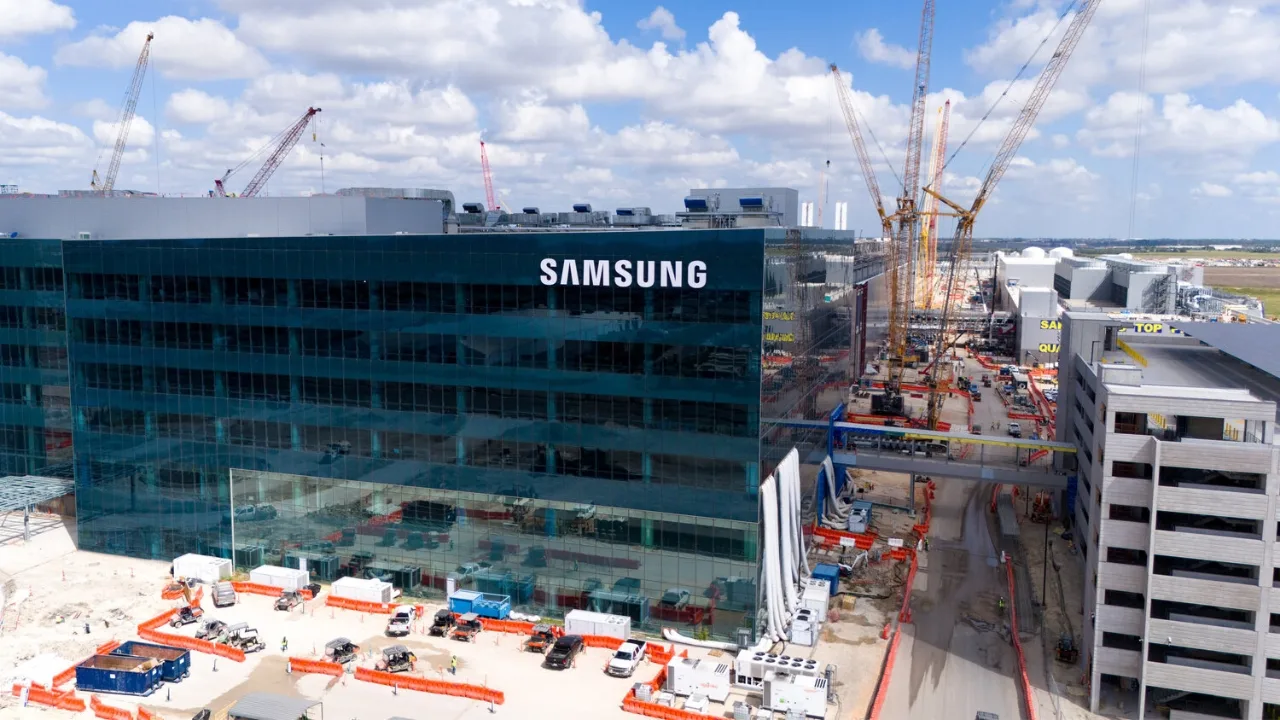
Once again Samsung Taylor Facility comes back into the news as the Korean tech giant kick-starts its ambitious scheme to form state-of-the-art 2nm semiconductor production lines in U.S. Samsung is now looking to compete directly with TSMC and Intel in making advanced chips in America.
The semiconductor facility from Samsung has had a tumultuous history since first being announced. Samsung was originally looking to use the site for mass fabrication of 4nm chips but environmental concerns, as well as disappointing performance, have delayed this process. With fast track efforts underway and more US companies seeking to make chips in the US, the Samsung Taylor Facility is getting ready for mass production using a 2nm process.
Importance of the Samsung Taylor Facility for the United States
It adds, that the Samsung Taylor Facility serves as an important unit within the companys global foundry business strategy. Now the latest reports also reveal that Samsung has started making fresh investments in the Texas-based plant, such as bringing in important personnel, installing new tools, and prepping 2nm technology.
Assignments of personnel will be rolled out in two phases, in September and November. Even more importantly, Samsung has so far appointed a new Head of Foundry for the Taylor site, which will give it operational autonomy that could speed the process.
Samsung Taylor Facility is projected to be a US semiconductor supply cornerstone with production lines slated for 16,000 to 17,000 12-inch wafers per month by late 2026 or early 2027.
Data reaches its audience and finally has an impact on real-world events.
The Samsung Taylor Facility became even more critical after the South Korean company entered into an agreement with Tesla to develop AI6 chips for next-generation self-driving vehicles. These chips need 2nm capabilities to manufacture, reinforcing the viability of the Taylor site as a key center for Samsung here in the US.
Samsung’s move to pour resources into its Taylor Facility indicates to American customers—Tesla, NVIDIA, AMD, and even Apple—that it is ready to go toe-to-toe with TSMC for advanced champion foundry attention.
Competitors: TSMC and Intel in Stateside
Samsung Taylor Facility will not be rival-free. TSMC has already started building its 2nm fab in Arizona, and Intel keeps moving on its US foundry outfit. To land big contracts in the US, Samsung has to prove it can consistently produce parts with good yields and good performance.
Nonetheless, Samsung Taylor Facility gives Samsung an unparalleled opportunity be in line with the US government semiconductor programs “Made in America” semiconductor initiatives while also locking important business associations.
Looking Ahead To Samsung Taylor Facility
The 2nm chips hitting the Samsung Taylor Facility target of High Volume Manufacturing (HVM) isn’t until late-2026 or early-2027, but that all hinges on how soon Samsung can get its SF2 yield rates stable. It will not only bolster Samsung’s foundry cred if it succeeds, but also give the US semiconductor ecosystem a solid TSMC- and Intel-proof hedge.
The Taylor Facility has taken on new life for Samsung as it emerges as a key part of the global semiconductor competition that will define the next era of computing.
FAQ
Semiconductor manufacturing plant nestled up in Texas, USA where Samsung planned to design advanced 2nm production lines.
Depending on how quickly Samsung can stabilize its 2nm SF2 yield rates, mass production will happen late in 2026 or early in 2027.
Through its 2nm production lines, Samsung aims to be providing to significant U.S. clients such as Tesla, NVIDIA, Apple and AMD.
Samsung and TSMC are competing to bring 2nm to the US. TSMC ranks number one on the general technology maturity scale, but Samsung’s Taylor Facility could entice customers through compelling partnerships and governmental incentives.
It bolsters the local semiconductor supply chain, scales back dependence on offshore fabrication and support the Biden administration’s call for advanced chipmaking to be closer to home.